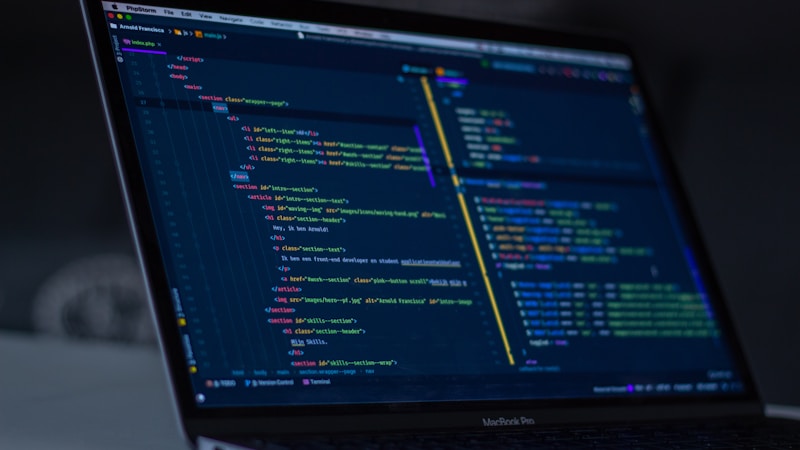
The software development landscape is undergoing a seismic shift as AI-powered tools become integral to the coding process, effectively creating a new abstraction layer above raw code.
The Rise of AI Assistants and 'Copilots'
Developers worldwide are now working alongside AI assistants powered by Large Language Models (LLMs) that can generate code, identify bugs, and suggest optimizations in real-time. These tools have moved beyond simple auto-complete to becoming 'pair programmers,' capable of understanding entire codebases and refactoring legacy systems. In many organizations, this has reduced the time spent on boilerplate code by up to 40%.
Impact on Productivity and The '10x' Developer
Companies report significant improvements in code quality and deployment speed. The definition of a 'senior' engineer is shifting from knowing syntax to mastering system architecture and prompt engineering. Junior developers are ramping up faster, using AI to explain complex logic and generate documentation instantly.
The Human Element: Review over Creation
Despite AI's capabilities, human creativity and judgment remain essential. The workflow is shifting from 'writing' to 'reviewing.' Developers now spend more time validating AI-generated logic, ensuring security compliance, and focusing on high-level problem solving rather than syntax errors.
Looking Ahead: Agentic Workflows
As AI models become more sophisticated, we are moving toward 'agentic' workflows where AI agents can autonomously plan, code, test, and deploy entire features with human supervision, fundamentally changing the economics of software production.

